CEO of GLITCHERS
Maxwell Scott-Slade
Using games to give us the early-warning signal we all need for better brain health.
About · Bio
The untapped power of games.
Maxwell Scott-Slade is the game designer behind Sea Hero Quest, the game-meets-citizen-science project that became the largest and most diverse brain-health study in scientific history.
Maxwell Scott-Slade has spent 19 years making games. At first this was with his brother and co-founder, building flash and iPhone titles played by hundreds of millions of people, but when his brother was diagnosed with schizophrenia, Max saw up close how crisis point can seemingly come out of nowhere. Early-warning signals for changes in the brain are almost always missed, especially for regular people who don’t have training or access to specialist clinics. Max set out to change that.
Invited into a room of neuroscientists through the Wellcome Trust, he found a field starved of data: studies built on a few hundred people, while his games reached millions. So, with a team of incredible collaborators, he set out to read the brain’s earliest signals at a scale no lab could match. The result was Sea Hero Quest: a game about steering a boat through virtual waters that became the largest and most diverse behavioural dataset in scientific history. 4.3 million players, 192 countries, ages 18 to 90, and more than 30 published papers. A clinical lab setting out to build it couldn’t have done so in 50 years.
Today, as CEO of GLITCHERS, Max is bringing Sea Hero Quest back to the public and making the case that how we navigate is one of the first true measures of brain health. It’s something that should be as routine as checking your heart rate. The big vision is to use games to build a global map of how the brain changes across a lifetime, so we get the opportunity to change the outcome, long before something breaks.
- Role
- CEO of GLITCHERS
- Based in
- Edinburgh, Scotland
Quotes
A few lines, in Max’s words.
Pick one and copy it straight into your piece.
“We track our bodies more than ever: heart rate, sleep, blood pressure. But the brain is a black box: there’s no signal at all, until something breaks. And you can’t change what you can’t see.”
“We’re asking our brains to do a lot more while we exercise them a lot less, and it just does not add up.”
“The early warning signs of a brain condition are there. We just don’t have the tools to read the signal.”
“A clinical lab setting out to build Sea Hero Quest couldn’t have done it in 50 years. We did, because we set out to make a game.”
“Sea Hero Quest turned a game about navigating a boat into the largest and most diverse behavioural dataset in scientific history: 4.3 million players across 192 countries.”
“With Sea Hero Quest, the vision is a global map of how the brain changes across a lifetime, so we can make decisions earlier, backed by data and powered by people.”
Talks · Developer Conference · 2026
How I built the largest behavioural dataset in scientific history using a game, and what it means for brain health.
Sea Hero Quest built a picture of how people navigate the world, because it looks and feels like a regular game. How 4.3 million people steered a boat across virtual waters tells us an important story about spatial ability, one of the earliest indicators for diseases like Alzheimer’s.
In this talk, Max guides you through what “spatial” means in the context of a brain-health signal, and how it relates to all of us in the age of cognitive offloading.
More talks
Institute of Engineering & Technology
In Conversation with Games Developer Max Scott-Slade
Ideas to Impact · Episode 6
Creating a “Fitbit for your brain”
Recognition
Award-winning work, with a purpose.
…and countless others for his work in this field.
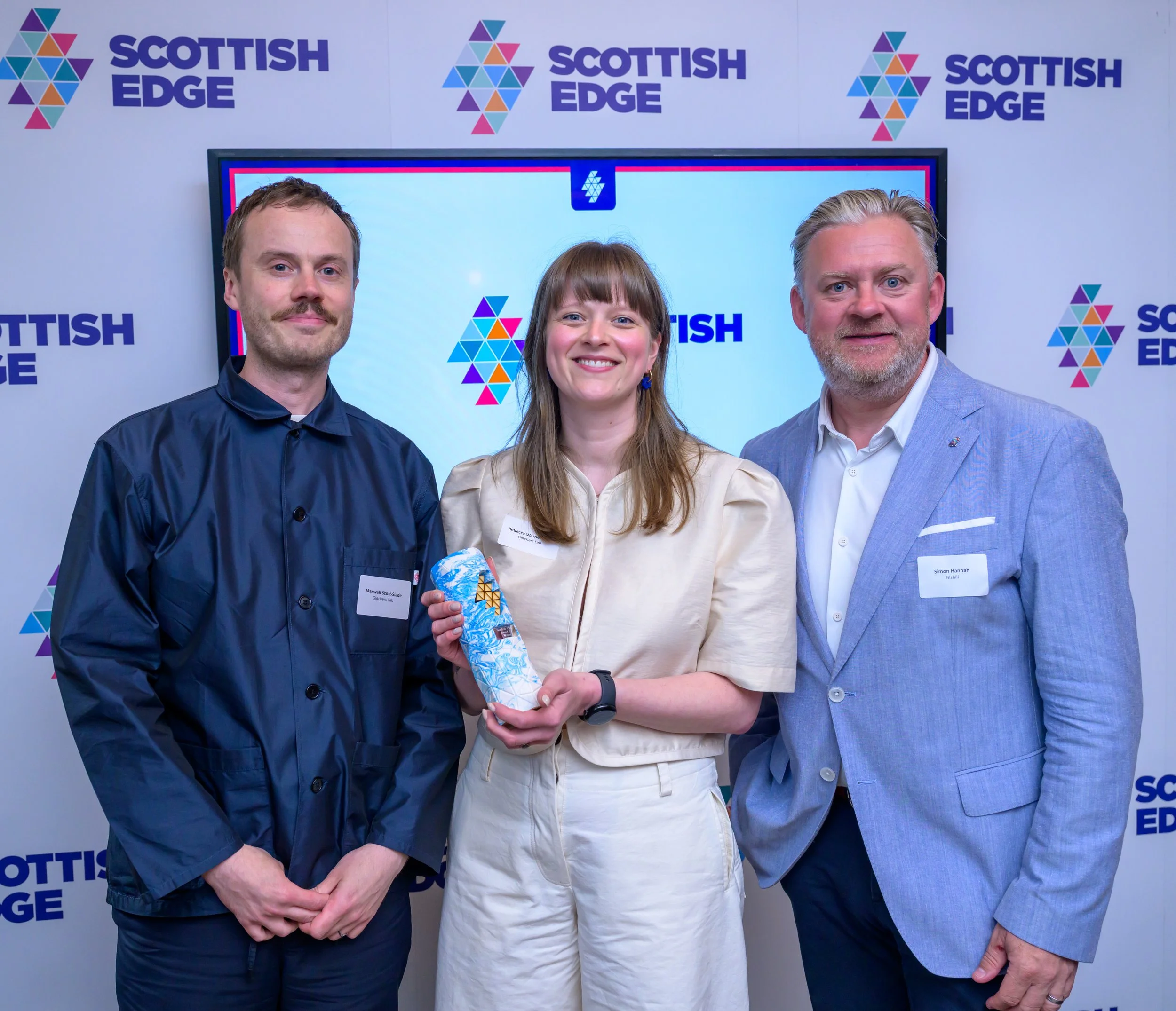 The GLITCHERS Lab team, winners of Scottish EDGE Round 25 Read the story ↗
A team effort
Max is just one person in an amazing team of collaborators. This site is about Max, but none of this work happens alone.